
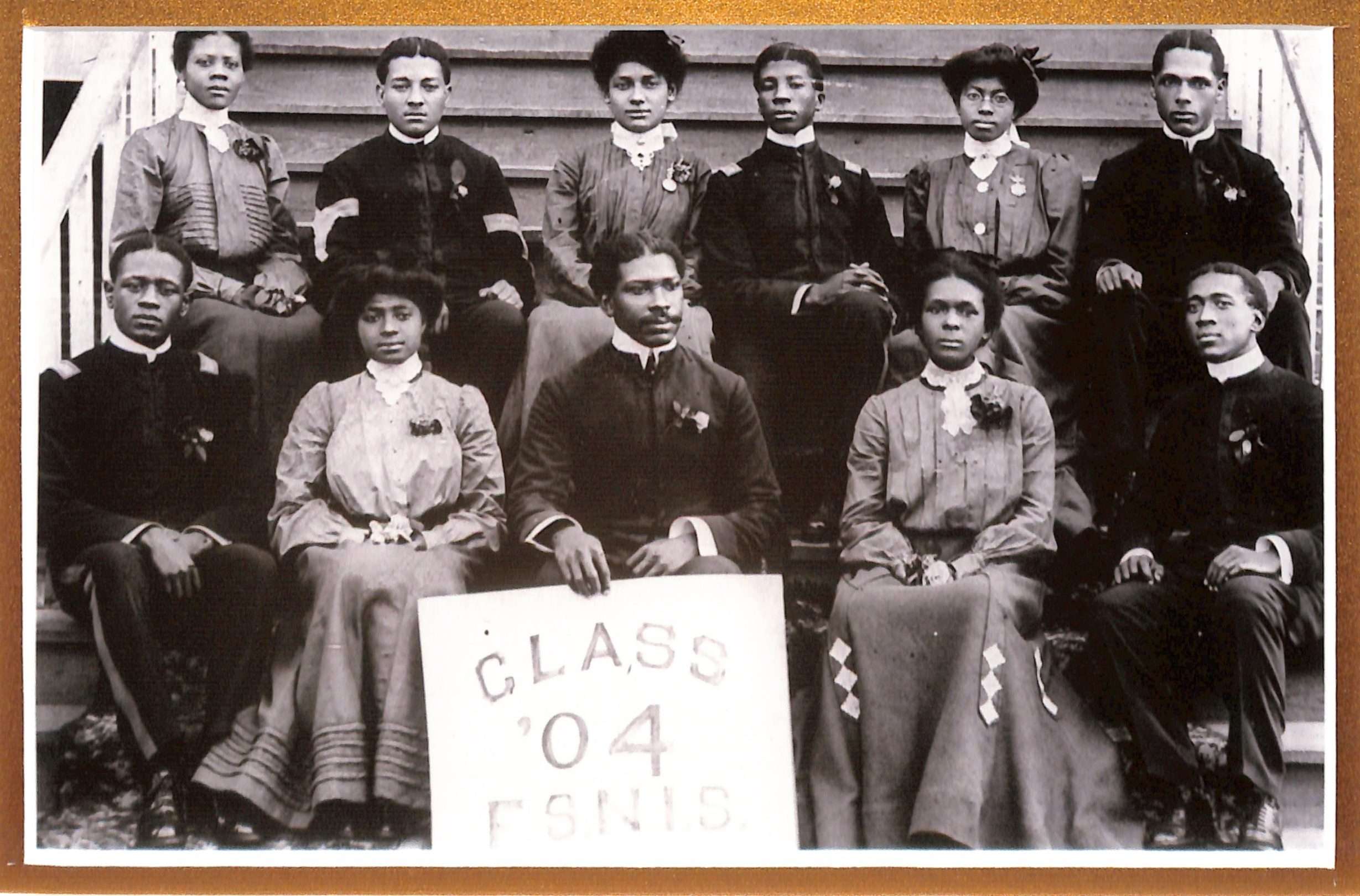
Booker T. Washington with Madam C.J. Walker and members of the National Negro Business League 1913, Tuskegee University Archives Collection
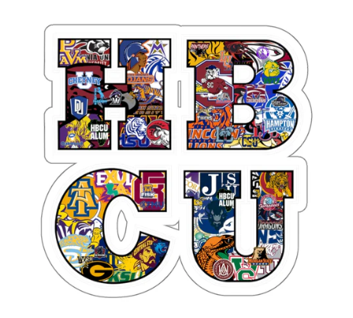
Today, there are more than 100 HBCUs across the United States, and they play a vital role in American education and culture. Throughout their history, HBCUs have welcomed students of all races, ethnicities, and nationalities. HBCUs have produced the highest percentage of Black graduates in the country.
HBCUs have always been sites of cultural vibrancy and educational enrichment for students, faculty, staff, and surrounding communities. They are characterized by dynamic institutional histories and time-honored traditions rooted in academic and artistic excellence and student activism.
The museums and archives on HBCU campuses have been forerunners in documenting, preserving, and exhibiting these histories and traditions, as well as the histories of local, regional, and national African American communities. While mainstream American museums and archives disregarded and devalued African American materials, HBCU repositories collected and preserved these treasures as evidence of African American contributions integral to American identity.
Between 1861 and 1900 more than 90 institutions of higher learning were established. Shaw University—founded in Raleigh, N.C., in 1865—was the first Black college organized after the Civil War.
The second Morrill Act of 1890 required states—especially former Confederate states—to provide land-grants for institutions for Black students if admission was not allowed elsewhere. As a result, many Historically Black Colleges and Universities (HBCUs) were founded.
Between 1861 and 1900, more than 90 institutions of higher learning were established. Shaw University—founded in Raleigh, N.C., in 1865—was the first Black college organized after the Civil War.
HBCUs are defined by the Higher Education Act of 1965 as “any historically Black college or university established prior to 1964, whose principal mission was, and is, the education of black Americans, and that is accredited by a nationally recognized accrediting agency or association determined by the Secretary [of Education].”
Museums, libraries, and archives help to preserve the cultural heritage of a people, of a nation. On the campuses of HBCUs, these repositories represent stellar efforts to collect, preserve, and share the complex cultural heritage of African Americans.Tulani Salahu-Din
Impact of HBCUsThroughout the twentieth century, HBCUs fostered generations of pioneering African American artisans, scholars, and laborers, generating a Black middle class and giving many the skills and connections needed to become leaders in their professional fields.
Today, the HBCU tradition remains steeped in the ideology of self-empowerment and community engagement, even decades after formal segregation that barred access to historically white institutions was repealed.
The need to tell the story of HBCUs, to enrich and diversify the narrative of American education by including underrepresented perspectives, is an ongoing, collaborative effort. The museum brings nuance and greater visibility to that struggle, as well as the strength of numbers.